Need sewer line repair services in Deltona?
Tell us what is going on with your pipes or drains. Send a note to contact@thinknames.garden or request an estimate with no obligation.
No obligation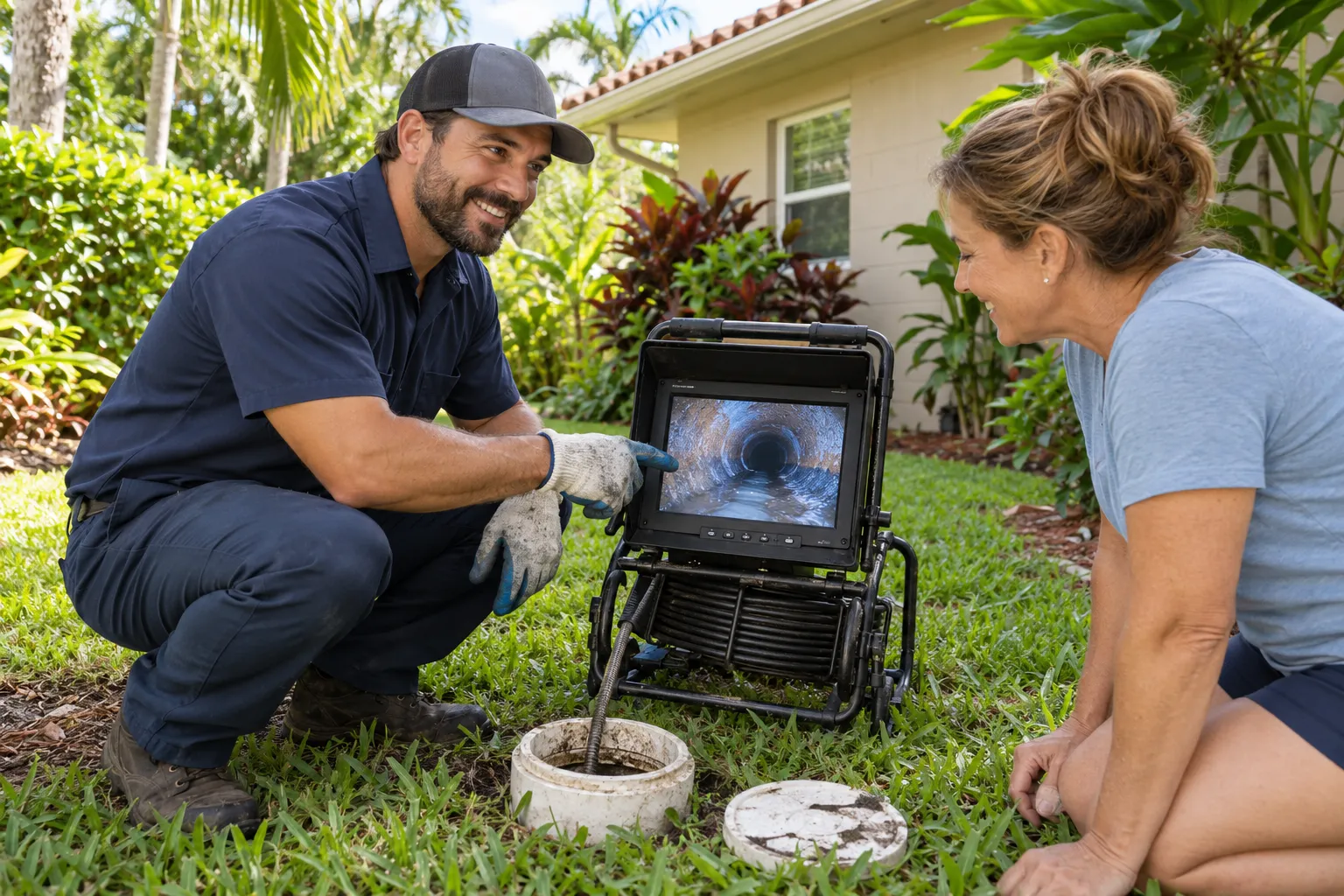
A lot of people think a slow drain in every room is just a bad clog. In practice, it often points to the main sewer line, the big pipe that carries all your wastewater out to the street or septic tank. That pipe sits underground, so you cannot fix it with a plunger or a store-bought cleaner.
Thinknames Plumbing is a referral service. We do not do the work. We connect homeowners in Deltona and the Deltona area with independent providers in our network who use cameras, cutting tools and repair methods built for buried pipe. This page explains what you can safely do yourself, what needs a pro, and what to ask before you agree to a repair.
A common belief says a backup is only a stubborn clog, so more plunging should clear it. In practice, sewage in a tub, shower or floor drain usually means the main line is blocked. Plunging just moves dirty water around.
Start with the shut-off. Stop running water in the house. That means no flushing, no laundry and no dishwasher.
You can keep people and pets away from the wet area. Open a window for fresh air. Wear rubber gloves and boots if you must step near it. Move rugs and boxes out of the way.
If you know where your main water shut-off valve is, you can close it to stop more water from entering the house.
Do not mix drain chemicals into a sewer backup. They can burn skin and release harsh fumes. Do not try to pull a cleanout cap if sewage is pushing against it. The pressure can spray. That job belongs to a provider with the right gear.
People often wait for a bad odor before they worry. Many failing lines give quieter hints first.
One slow sink is probably local. Several symptoms at once point to the main line.
Buried pipe has a hard life. Most failures come from a short list of causes.
Roots love moisture and slip into tiny joint gaps. Over time they grow into thick mats that catch paper and waste. In our warm, wet climate, roots grow most of the year. Soil that swells in heavy rain and dries out in dry spells can also pull joints apart.
Homes from the 1970s and earlier may have clay, cast iron or fiber-type pipe. These materials crack, flake or sag with age. Past repairs matter too. A patch done years ago may have been joined to a different pipe type, and that joint can become a weak spot.
Almost daily summer storms and hurricane season can flood the ground around a pipe. Heavy water can wash soil out from under it, leaving a low spot where waste settles. Storm surges can also push water into a damaged line.
Many homeowners assume a pro will start digging. Fact: a good diagnosis usually happens before any shovel comes out.
A provider feeds a small waterproof camera through the cleanout. The video shows roots, cracks, sags and breaks. It also shows how far down the line the problem sits. Ask to see the footage or get a copy.
A locator tool picks up the camera signal from above ground. This marks the depth and path of the pipe, which helps limit how much yard or slab needs to be opened. Concrete block homes on slabs often have lines running under the floor, so this step matters.
Not every damaged line needs full replacement. The right fix depends on what the camera shows.
Blocked pipe services can clear roots and buildup so the line flows again. But if the pipe is cracked, the blockage tends to return. Ask whether cleaning is a short-term step or the full answer.
If damage is limited to one section, a provider may dig and replace just that stretch.
Lining places a resin-coated sleeve inside the old pipe. It can mean less digging, though it does not suit every pipe shape or every level of damage.
Pipe that is collapsed, badly sagging or crumbling may need replacing. This can be done by open trench or by pulling a new pipe through the old path.
Most homeowners are responsible for the sewer line from the house to the property line. Many areas treat the section beyond that, or under the street, differently. Rules vary by city, county and utility, so ask the provider who is responsible for which part.
Sewer work often needs a permit and sometimes an inspection. A provider usually handles the paperwork, but ask who will do it. Condo and subdivision owners should also check with their association, since shared lines may not be yours to repair.
A clear provider answers these without rushing you.
Some policies may cover sudden damage, but many exclude wear, roots and slow leaks. Check your policy and ask your insurer. Providers can often help document damage for a claim, so keep photos and any camera footage.
A provider runs a small camera through the pipe to show cracks, roots and sags clearly.
Specialized tools cut through roots and buildup so wastewater flows out of the home again.
Damaged sections can be replaced, or relined from inside to limit digging in your yard.
Collapsed or crumbling pipe can be replaced, with a written quote reviewed before work begins.
Sewer costs depend on pipe depth, length, material and what lies above it. These are typical U.S. ranges only. Always get a written quote that lists what is included before work starts.
| Service | Typical range | Notes |
|---|---|---|
| Camera inspection | $100 – $500 | Often worth it before any dig or lining |
| Main line clearing | $150 – $600 | Roots may grow back if the pipe is cracked |
| Cleanout installation | $250 – $1,500 | Gives safer access for future work |
| Spot repair | $1,000 – $4,000 | Depends on depth and surface to restore |
| Pipe lining | $4,000 – $12,000 | Less digging, but not right for every pipe |
| Full line replacement | $3,000 – $25,000 | Varies widely by length, depth and method |
Stop using fixtures and close the main water valve if you know where it is, to limit the backup.
Request a callback to check provider availability or send a request through the form.
We connect you with an independent provider who serves your part of the area.
Look over the camera findings, the repair options and the price before you decide.
Providers in our network are separate businesses that handle the sewer work in your area.
We explain myths and next steps clearly so you know what to expect before you speak with anyone.
Aging pipes and past repairs hide surprises, so we encourage asking providers about pipe material and history.
Request an estimate and compare it at your own pace, with no pressure.
Tell us what is going on with your pipes or drains. Send a note to contact@thinknames.garden or request an estimate with no obligation.
No obligationA clog often affects one drain and clears with cleaning. A broken or collapsed line tends to cause repeated backups in many drains, gurgling, wet yard spots or sinking soil. A camera inspection shows which one you have.
You can stop water use, keep people away and close the main valve. Digging, cutting or replacing buried sewer pipe needs special tools, safety steps and often a permit, so it is wise to leave it to a provider.
Some policies may cover sudden damage, but many exclude wear, aging and roots. Check your policy and ask your insurer. Providers can often help document damage for a claim.
Tell us what is going on with your pipes or drains. Send a note to contact@thinknames.garden or request an estimate with no obligation.
No obligation